
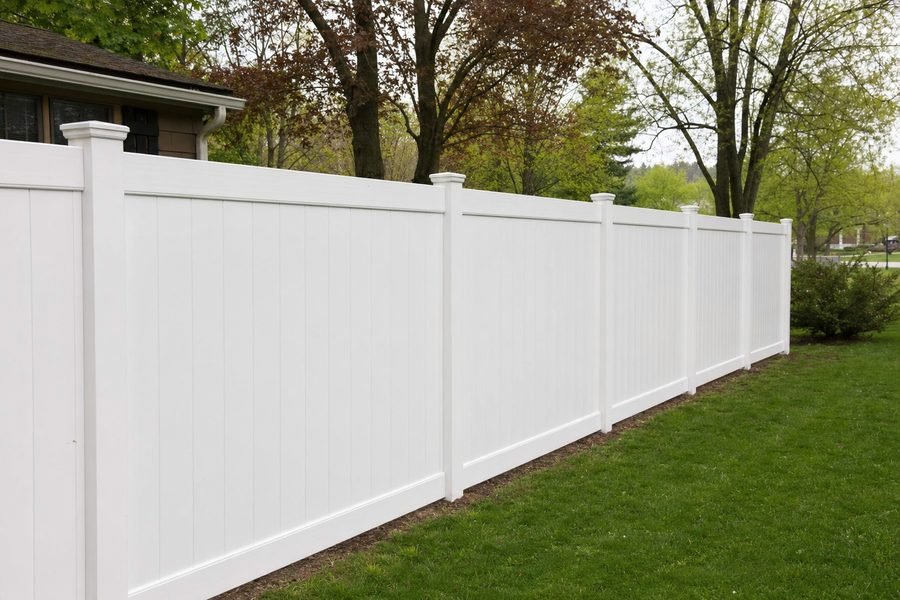
In our climate, the decision really comes down to maintenance tolerance and budget. North Carolina hands fences a tough environment — long humid summers, heavy thunderstorms, and the occasional tropical system pushing through the Sandhills. Vinyl shrugs most of that off and can last 25 to 30 years with little more than a hose-down. Wood is warmer-looking and cheaper to install, but the same humidity that rots untreated lumber means you’ll be sealing or staining it every few years to get a similar lifespan.
How does each material handle NC heat and humidity?
Humidity is the real test here. Wood absorbs moisture, which leads to warping, cupping, and eventually rot at the base where posts meet the ground. Pressure-treated pine resists this far better than untreated lumber, but it still moves with the seasons and needs a water-repellent finish to stay solid. Vinyl doesn’t absorb water at all, so it won’t rot, swell, or feed mold the way wood can. In a wet backyard or a low spot that holds water, vinyl has a clear edge.
Sun matters too. Years of harsh summer UV can fade and dry out wood, and cheaper vinyl can yellow. Quality vinyl with UV inhibitors holds its color, while wood will gray naturally unless you stain it.
Which lasts longer — wood or vinyl?
Properly maintained, a pressure-treated wood fence lasts roughly 15 to 20 years in this climate. A quality vinyl fence commonly runs 25 to 30 years or more. The catch with wood is the word “maintained” — skip the staining and sealing and that lifespan drops fast as posts rot and pickets warp. Vinyl’s longevity isn’t conditional on upkeep, which is why it wins on pure durability.
What does upkeep actually look like for each?
Wood asks for real work: clean it, then re-stain or re-seal every two to three years to lock out moisture, plus the occasional board or fastener replacement. Vinyl asks for almost nothing — spray off dirt and pollen with a garden hose a couple of times a year and you’re done. No painting, no sealing, no rot to chase. If you’d rather not spend weekends maintaining a fence, that difference is the whole story.
Is wood or vinyl cheaper?
Wood wins on day one. A wood privacy fence usually installs for noticeably less per linear foot than vinyl, so it’s the better fit for a tight upfront budget or a large perimeter. Vinyl costs more to install but saves money over time because you’re not buying stain or replacing rotted boards. Over a 25-year window, the gap narrows once you add up wood’s maintenance costs — so the “cheaper” option depends on whether you’re optimizing for this year or the next two decades.
So which should you choose in Fayetteville?
Pick wood if you want the classic look, a lower upfront cost, and you don’t mind periodic staining. Pick vinyl if low maintenance and longevity matter most and you’re willing to pay more now to do less later. Both are solid choices for a Sandhills backyard — there’s no wrong answer, just the right fit for how you want to spend your time and money. Damaged sections of either can often be handled with fence repair rather than a full replacement.
Not sure which way to go for your yard? BK Fence Experts will walk your property, talk through both options honestly, and send a free written quote. Call (910) 466-8629.