
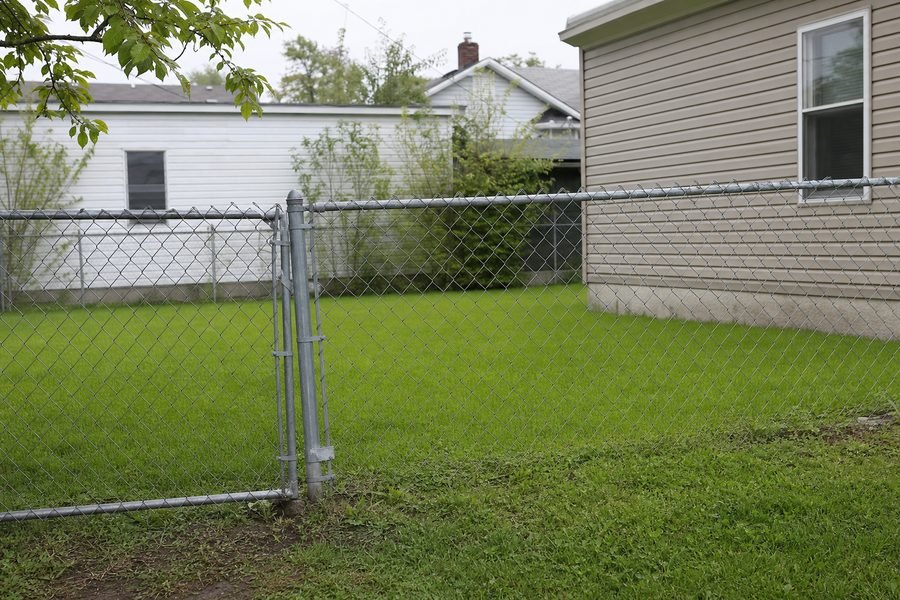
There’s no single “best” fence for every dog — the right choice depends on your specific dog. A laid-back small breed is happy behind a simple chain link fence, while a big athletic jumper or a determined digger needs a taller, more solid barrier with reinforcement at the ground. The goal is a fence your dog can’t jump over, dig under, squeeze through, or see enough through to get worked up. Get the height and the bottom right, and almost any quality fence will keep your dog safe in a Fayetteville yard.
How tall should a fence be for a dog?
Height is your first defense against jumpers. For most dogs, 4 feet is a reasonable minimum, but athletic or large breeds — shepherds, labs, huskies, many working dogs common around Fort Liberty — really need 6 feet. A fence that’s too short turns into a launch pad for a motivated dog. When in doubt, go taller; you can’t easily add height later, and the few extra dollars per foot are cheaper than a lost pet.
Which fence material is best for dogs?
Each material has a place depending on your dog:
- Wood privacy: a solid wood fence is great for reactive dogs because they can’t see passersby, other dogs, or wildlife — which cuts down on barking and fence-running.
- Chain link: chain link is affordable, durable, and excellent containment; the trade-off is your dog can see through it, so a barker may stay stimulated.
- Vinyl: a vinyl privacy fence gives the see-nothing benefit of wood with smooth panels that don’t give claws anything to climb.
- Ornamental aluminum: looks sharp, but the spacing and footholds can let small dogs slip through or big dogs climb, so it’s better paired with the right picket spacing.
How do you stop a dog from digging under the fence?
Diggers are the most common escape artists. The fix is to deny them an opening at the bottom: bury the fence a few inches into the ground, run a concrete or paver footer along the base, or add an L-shaped dig guard of buried wire mesh angled outward. Sandy Sandhills soil digs easily, so this matters more here than in rockier regions. Planning the bottom of the fence at install — not after your dog has already found the weak spot — saves a lot of frustration.
What about climbers and small dogs that slip through?
Climbers need a smooth, tall, solid surface with no horizontal rails on the inside to use as footholds — vinyl and flush-board wood are ideal. Small dogs that squeeze through need tight picket spacing or chain link with a small enough mesh. The same fence that perfectly contains a 70-pound lab might have gaps a terrier walks right through, so the spacing has to match the smallest dog in the household.
Are invisible or electric fences a good idea?
Buried electric “invisible” fences are cheaper and preserve your view, but they have real limits: they don’t keep other animals or people out, they rely on a collar that can fail or run out of battery, and a determined dog will sometimes run through the correction. For reliable containment and your dog’s actual safety, a physical fence is the stronger choice. If you already have one that’s failing in spots, a quick fence repair often restores it.
Want a fence built around your dog’s size and habits? BK Fence Experts will recommend the right height, material, and dig protection for your yard. Call (910) 466-8629 for a free quote.