
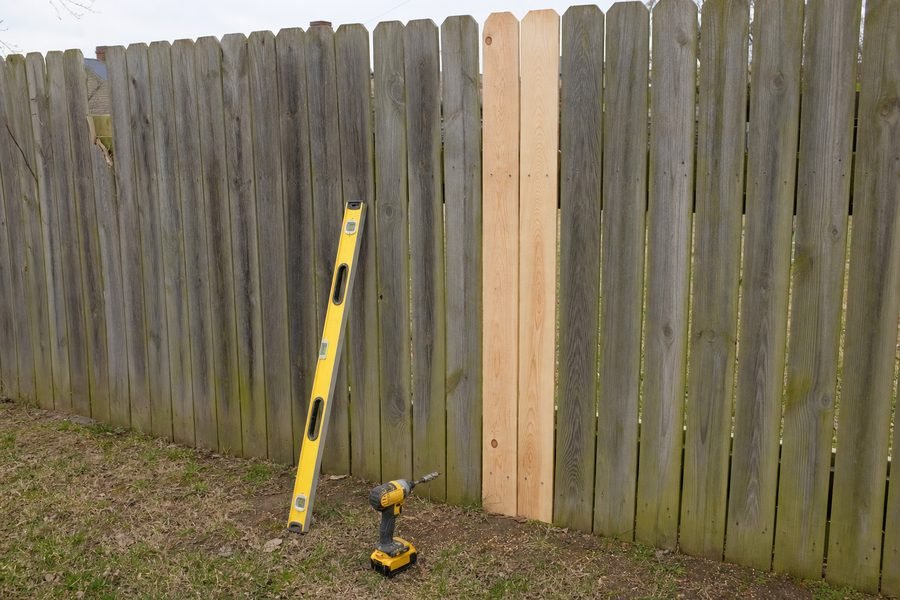
A leaning post almost always comes back to the footing — the concrete or soil at the base has loosened, washed out, or the post itself has rotted where it meets the ground. The fix depends on which it is. If the post is still solid, you can dig it out, plumb it back straight, brace it, and reset it in new concrete. If the wood is rotted through at the base, no amount of resetting will hold; the post needs to be replaced. Here’s how to tell the difference and handle each.
Why do fence posts start to lean?
A few common culprits cause it. Rot is the big one — wood posts set in or near the ground absorb moisture and decay at the soil line, which is why the lean often starts there. Loose or undersized footings are another; if the original concrete was too shallow or the post was just tamped into dirt, NC’s sandy soil shifts and lets it tip. Storm wind on a tall privacy fence puts heavy load on posts, and saturated ground after heavy rain loosens its grip. Knowing the cause tells you whether a reset will hold or whether you’re chasing a deeper problem.
How do you straighten and reset a leaning post?
If the post is sound, the repair is straightforward:
- Dig out the soil and any old concrete around the base of the post.
- Push the post upright and check it with a level so it’s truly plumb.
- Brace it in place with stakes and scrap lumber so it can’t move.
- Pour fresh concrete into the hole around the base, sloping the top away so water runs off.
- Let the concrete fully cure before removing the braces or putting load back on the post.
The cure time is the part people skip and regret — pull the braces too early and the post drifts right back out of plumb.
How do you know if the post needs replacing instead?
Do a simple test: push on the post and look at the base. If the wood is soft, spongy, crumbling, or you can sink a screwdriver into it, it’s rotted and resetting won’t fix it. A rotted post will keep failing no matter how good the new concrete is, because the wood above the footing can’t hold. In that case the post comes out and a new one goes in — ideally pressure-treated and set deeper, with the concrete sloped to shed water and slow future rot.
Can you fix a leaning post without removing the fence?
Often, yes. For a post that’s leaning but not rotted, a “sister” repair sometimes works — driving a steel post anchor or a treated support next to the existing post and fastening them together to brace it straight. This avoids detaching panels. But it’s a patch, not a cure; if the underlying post is rotting, you’re just buying a little time. For a single post in an otherwise good fence, resetting or replacing that one post is usually the cleaner long-term fix.
When should you call a pro instead of DIY?
A single solid post on a short fence is a reasonable weekend project. Call a pro when several posts are leaning, when the posts are rotted and load-bearing for gates, when the fence is tall and catching wind, or when the lean is a symptom of a footing problem across the whole fence line. Multiple failing posts usually mean the original install cut corners on depth or footings, and a proper fence repair addresses the cause instead of treating one post at a time. Storm-damaged fences in particular are worth a professional look before more posts go.
Got a post — or a whole fence — starting to lean? BK Fence Experts will diagnose whether it needs a reset or a replacement and fix it right. Call (910) 466-8629 for a free quote.